screenshot 2026 08 28 153725 removebg preview

Common AC Issues Every Homeowner Should Know (And How to Fix Them)

Key Takeaways on Common AC Issues

  • Check thermostat settings, replace dirty filters, unblock vents, and clear outdoor debris first – these steps often restore cooling and prevent avoidable breakdowns.

  • Stop the system and call a licensed technician for humming units, refrigerant leaks, electrical odors, grinding noises, or repeated breaker trips.

  • Never run an AC with frozen coils. Turn cooling off, run the fan to thaw the ice, and protect the compressor from costly damage.

  • Fix refrigerant leaks and clogged drain lines at the source – recharging the system or bypassing safety switches only delays damage.

  • Match maintenance to your climate: watch drains in humid regions, change filters more often in dusty areas, and rinse coastal units regularly to slow salt corrosion.


An AC that hums but won’t blow cool air is telling you something. Most of the time, that signal points to a failed capacitor – one of the most common problems homeowners face every cooling season. Most of these breakdowns are preventable with regular maintenance.

Knowing what to look for makes the difference between a quick fix and a costly repair. This guide covers the six common AC problems that show up most often – refrigerant leaks, frozen coils, clogged drain lines, blower motor failures, and more. We walk through what causes each one, what you can safely check yourself, and when to call a licensed technician before the problem gets worse.

Common Air Conditioner Problems and Solutions
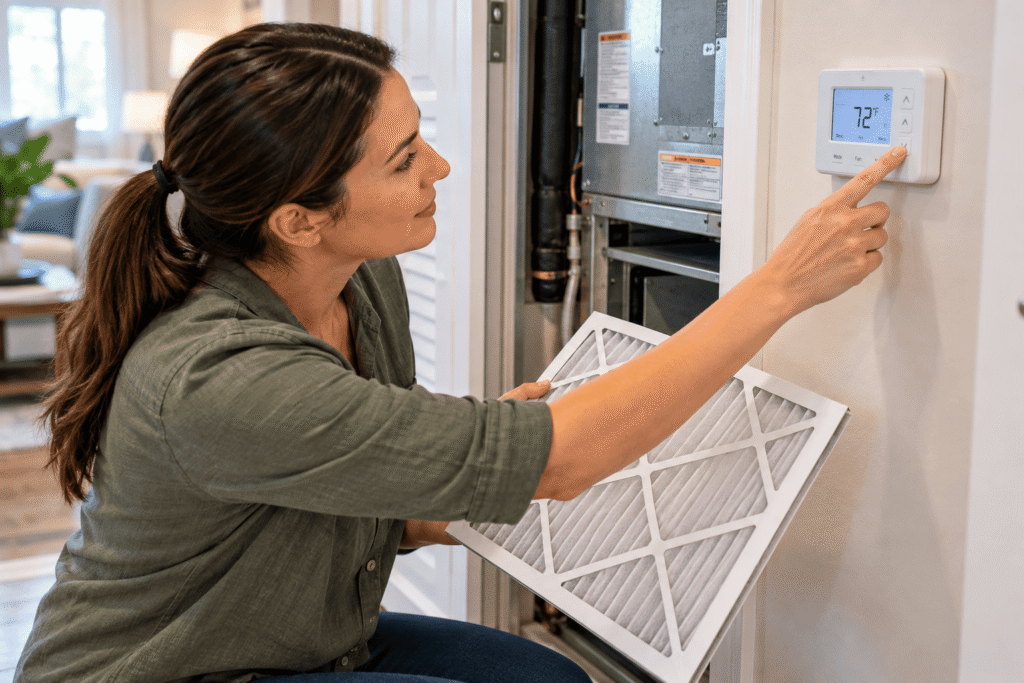
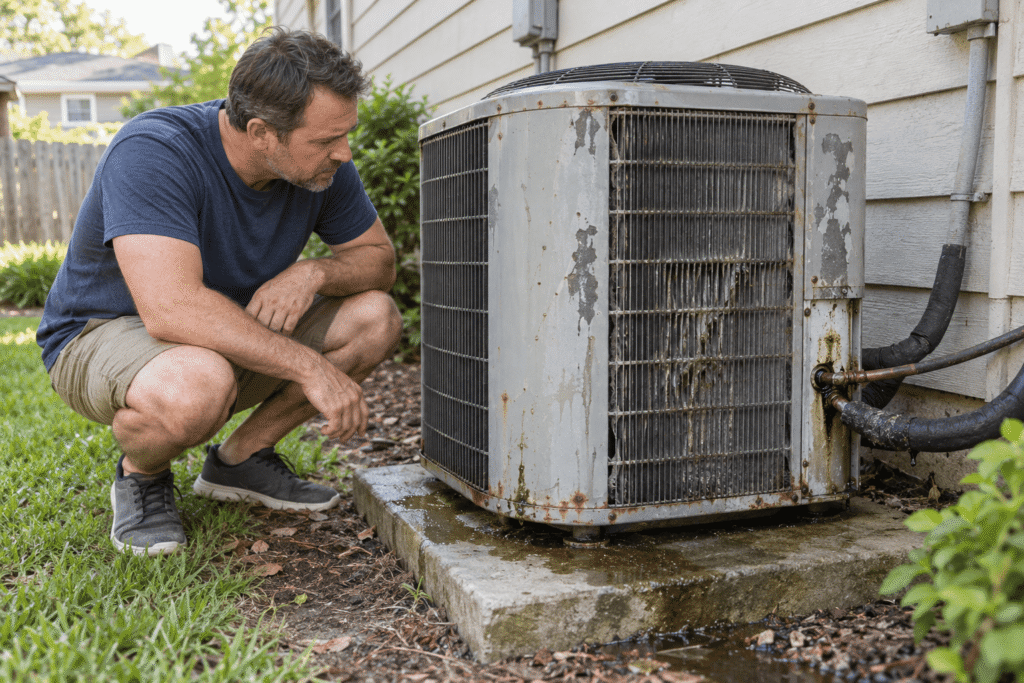
Homeowner safely inspecting an air conditioner thermostat and checking a clean air filter before calling an HVAC technician.

Six problems account for most of what goes wrong during a cooling season. Knowing which one you’re facing saves time, protects the equipment, and helps you give the technician a clear picture before they arrive.

Failed Capacitor: Why a Humming AC Needs Professional Repair

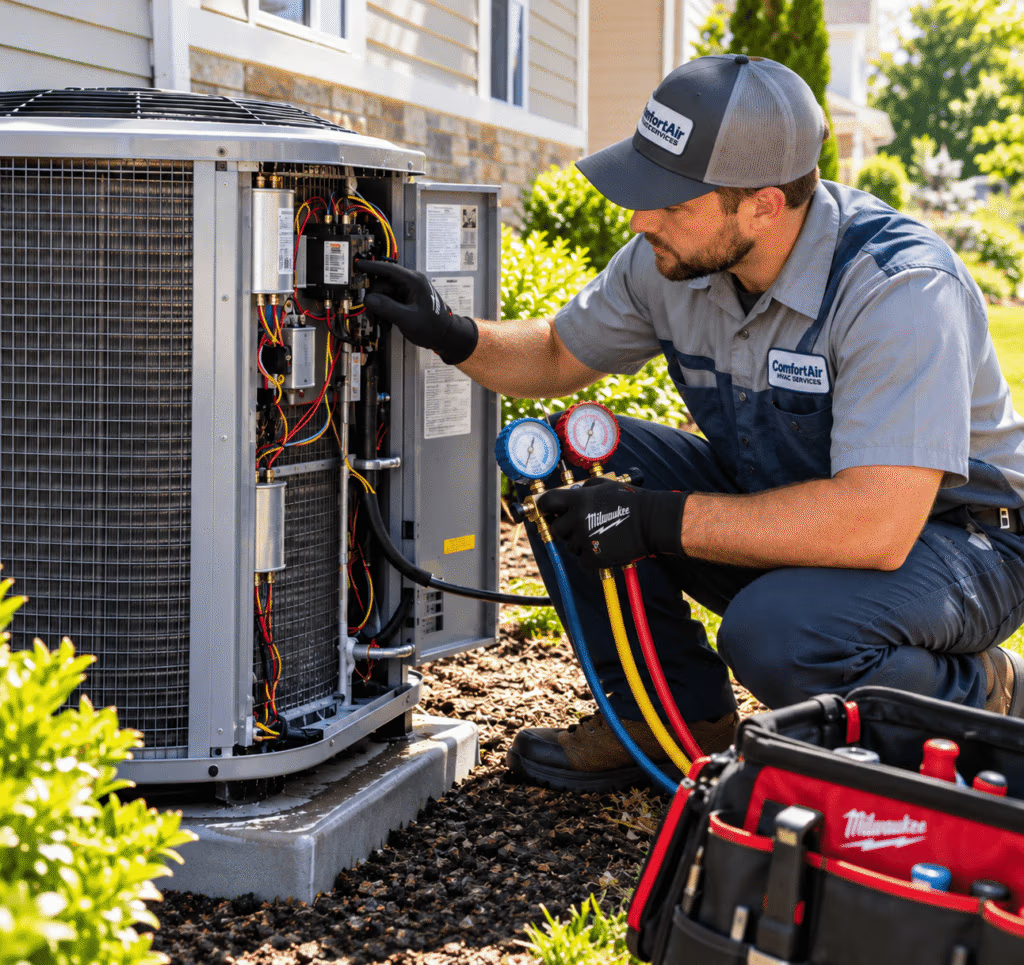
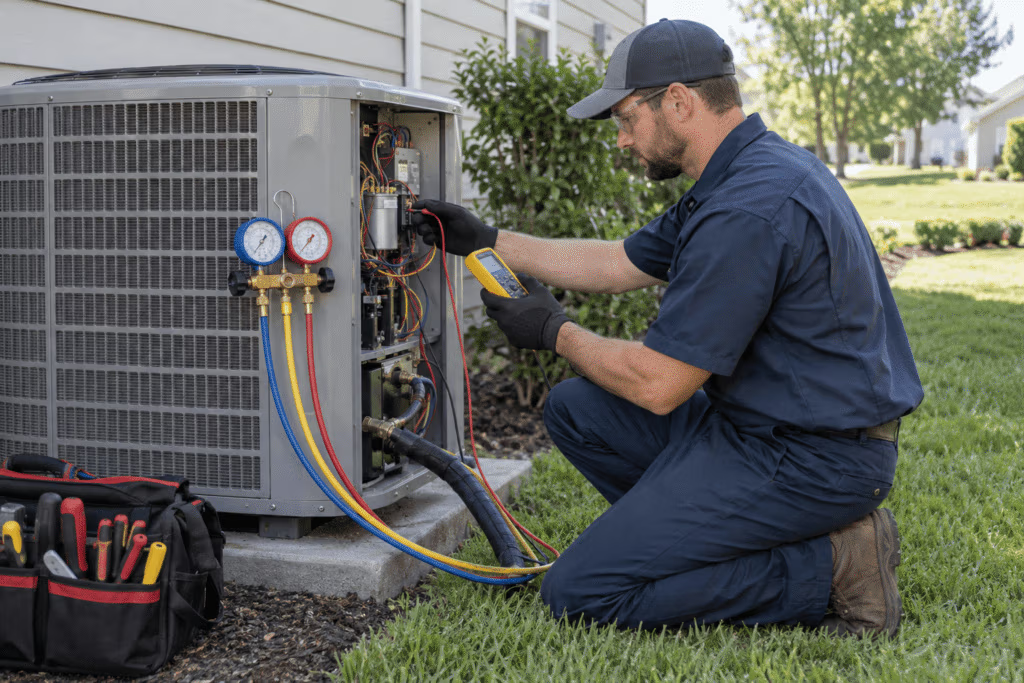
A humming outdoor unit usually points to a failing capacitor – the part that gives the compressor and fan motor the electrical push needed to start. Warning signs include delayed startup, short cycling, warm air from the vents, and a hum that grows louder as the part wears out. A capacitor holds an electrical charge even with the power off, so testing it with a multimeter and confirming the correct microfarad rating is a job for a licensed technician, not a weekend project.

Refrigerant Leaks and Valve Faults: Why a Recharge Alone May Not Help

When the AC takes longer to cool the house or you hear hissing near the lines, a refrigerant leak or faulty valve is likely the cause. Refrigerant does not get consumed like fuel, so a drop in level always means it is escaping somewhere in the lines or valves. Topping off the charge without sealing the leak only delays the problem – levels keep falling and ice can return to the coil within days.

Clogged Drain Lines: Clearing Blockages Without Bypassing Safety Switches

Mold, dust, and debris collect in the condensate pan and block the drain line, causing puddles, musty odors, or water damage near the indoor unit. Many systems include a float safety switch that shuts cooling off once water rises, and that switch should stay in place rather than get bypassed. A technician clears the blockage with a wet vac or plumber’s snake, then flushes and tests the line before restoring power.

Frozen Coils: Stop Cooling and Let the Ice Thaw

Ice on the evaporator coil blocks heat transfer, leaving the system pushing warm air with weak flow. Switch the thermostat off and the fan on – light frost clears in 1 to 3 hours, while heavy buildup can take 4 to 8 hours. Running the unit while frozen strains the compressor, and replacing a damaged one can cost between $800 and $2,300.

Failed Blower Motor: When Weak Airflow Points Past the Filter

Weak airflow despite a clean filter often traces back to the blower motor rather than the coil. A struggling motor runs sluggish, stalls, or overheats, and left unchecked, it can burn out and damage other components along with it.

Condenser Fan or Compressor Failure: Why the Outdoor Unit Stops Cooling

When the condenser fan stops spinning, heat cannot leave the coil, so the compressor overheats and shuts down to protect itself. A silent outdoor unit – even with the thermostat calling for cooling – points to a compressor or fan motor that is not getting power, something only a professional test can confirm.

Safe AC Checks Before You Call a Technician
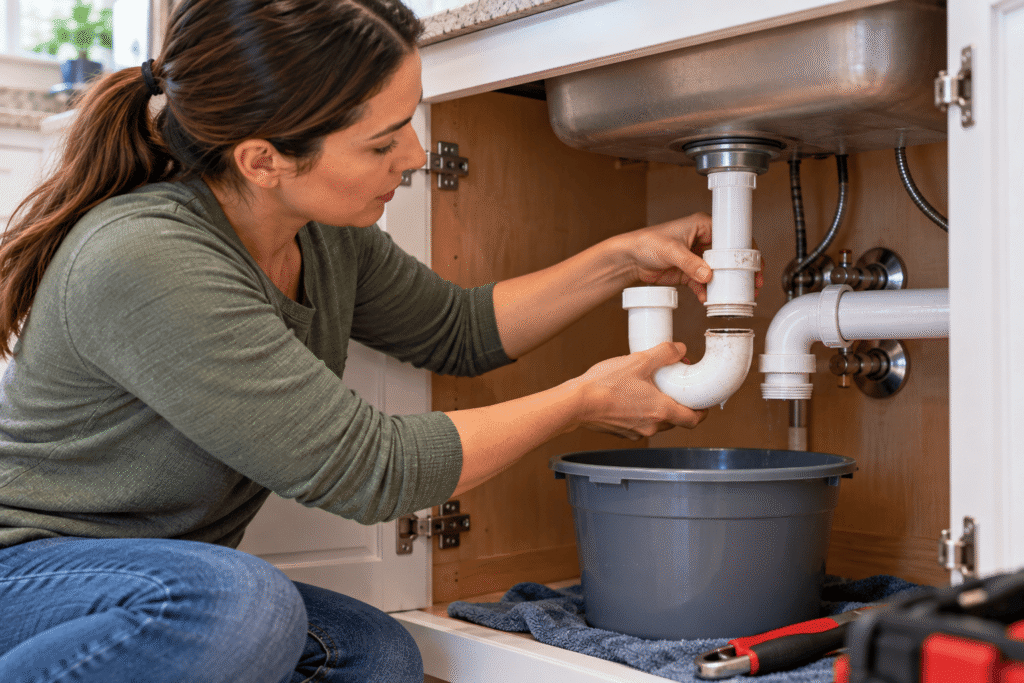
Homeowner removing a sink P-trap with a bucket underneath to clear a clogged drain.

A handful of checks can rule out simple causes and save you a service call altogether. Start here before picking up the phone.

Check Thermostat Settings, Batteries, and Error Messages

Start with the thermostat. A blank screen usually means dead batteries or a tripped breaker – swap in fresh batteries and check your electrical panel before assuming the worst. A filter reminder or low battery icon on the display is the system telling you exactly what it needs. Modern thermostats also build in a five-minute delay to protect the compressor from short cycling, so a blinking “Cool On” message is a safety pause, not a fault. Wait at least ten minutes before concluding something is actually broken.

Replace a Dirty Filter and Unblock Supply and Return Vents

A clogged filter restricts airflow, forces the blower to work harder, and is one of the most common causes behind tripped breakers. Check filters monthly and replace them every 30 to 90 days – sooner if pets or allergies are part of your household. Vacuum the return grille every three to six months and clear furniture or drapes blocking supply vents. A blocked return strains the system as much as a dirty filter does.

Clear Leaves and Debris Around the Outdoor Unit

The condenser needs room to release heat. Grass clippings, leaves, and overgrown landscaping pile against the cabinet and choke off the airflow the unit depends on. Clear loose debris from the ground and keep at least two feet of clearance on all sides – but do not reach into the cabinet or remove panels yourself.

Stop Troubleshooting for Burning Smells, Grinding, or Repeated Breaker Trips

Some signs mean stop – not troubleshoot further. Burning odors, grinding or buzzing noises, and a breaker that trips the instant the system starts all point to electrical shorts or failing components that need a licensed technician. Do not keep resetting the breaker. That habit risks further damage to your home’s electrical system and should be left to a professional to diagnose.

What Professional AC Repairs Involve and Cost

When your own checks don’t solve the problem, a technician starts with proof, not guesswork. Every component gets tested. A number goes in writing only after the actual cause is confirmed.

How Technicians Test Parts and Confirm the Cause

Diagnosis comes before any repair estimate. A technician pulls model and serial numbers, checks warranty status, and tests the suspect part before recommending a fix. Homeowners should expect a clear explanation of what was found and what repair is needed before any approved work begins.

How Parts, Labor, and Warranty Coverage Affect the Quote

Part costs vary by component: a capacitor runs $100 to $400, a fan motor $200 to $700, and a compressor $900 to $2,900. Manufacturer parts warranties typically run 5 to 10 years, while labor coverage runs separately – usually one to two years, unless an extended plan is in place. Without that coverage, labor alone for a compressor replacement runs $600 to $1,200. Because warranty terms and labor rates can vary, homeowners should request a written proposal showing the scope of work, parts, pricing, and applicable warranty before authorizing repairs.

When Repair Costs and System Age Favor Replacement

ENERGY STAR suggests considering replacement once a system passes 10 years old. One screening method multiplies the unit’s age by the repair cost – totals over $5,000 are a prompt to compare options in writing rather than commit to a repair on the spot. Full replacement typically runs $5,800 to $17,000 depending on the system and home. A written estimate makes that comparison straightforward.

AC Maintenance That Fits Your Climate
Homeowner cleaning food debris from a kitchen sink drain strainer to prevent clogs.

Maintenance schedules are not one-size-fits-all. The local climate decides which part of your system takes the most abuse – and which habits matter most for keeping it running season after season.

Match Filter Changes to Dust, Pets, and Seasonal Use

Filter type determines how often you need to check. Fiberglass filters need checking every 30 days, while thicker 4-inch pleated filters can run 3 to 12 months between swaps. Multiple pets call for monthly checks and replacement every 60 days, and running the system through a long, unbroken summer shortens that window too. Check the filter first – it costs nothing and solves more problems than most homeowners expect.

In Humid Areas, Watch the Drain Pan and Keep Moisture Moving

High humidity puts the condensate drain line under constant stress. Humid climates can pull 5 to 20 gallons of water from indoor air daily, and a clogged drain line can trip the float safety switch, shutting cooling down entirely. A monthly vinegar flush through the cleanout tee between April and October keeps algae from blocking that line. Clean drain lines also improve system efficiency by 10 to 15% – a simple habit with a measurable payoff.

In Hot, Dry Areas, Keep the Outdoor Unit Clear of Dust and Debris

Dusty climates push fine grit into filters and internal parts faster than most homeowners realize. Filter changes as often as every two weeks may be warranted during the worst stretches, paired with MERV 8 to 13 rated filters that trap fine particles before they reach the coil or blower. Clearance around the outdoor unit matters here too – keep at least two feet on all sides and brush loose debris away after windy conditions.

In Coastal Areas, Ask About Salt Exposure and Coil Protection

Salt air is one of the harshest conditions an outdoor unit faces. Salt exposure can shrink a unit’s lifespan from 15 years down to 8 to 10 years within a mile or two of the shore. Monthly fresh-water rinses on the outdoor cabinet remain the single highest-value maintenance habit for coastal homeowners. Factory-applied coastal coatings, priced $300 to $600 above standard equipment, can double the outdoor unit’s working life. Service frequency should scale with distance from the water – quarterly within a mile, semi-annual within three. Homeowners should ask their technician about coating options before the next installation or replacement.

Schedule a Tune-Up Before Your Area’s Peak Cooling Season

A pre-season tune-up catches worn parts, dirty coils, and low refrigerant before the hottest weeks arrive – and before every other homeowner in the region is calling for the same appointment. Booking service ahead of peak demand gives a technician the time to diagnose problems carefully, explain the findings, and present options before any work begins. That timing also keeps the system running efficiently from the first hot day forward.
Keep Your Home Cool With Professional AC Repair and Maintenance

Unusual noises, frozen coils, or recurring AC problems? Don’t wait for a complete breakdown to get the help your system needs. Turn to Comfort Experts for professional air conditioning repair and maintenance that takes the guesswork out of keeping your home comfortable. From diagnosing persistent issues to planning seasonal upkeep, our team can help you address warning signs and keep your system running reliably. Contact Comfort Experts today to schedule your AC service and give your cooling system the attention it needs before the next hot day.

Air Conditioning Repair 101: Quick Fixes and When to Call the Pros

Feeling the heat from a malfunctioning air conditioner can turn any comfortable home or business into a sauna. Whether it’s the middle of a blistering summer or you’re just trying to keep things cool, knowing how to handle minor AC issues can be a lifesaver. But sometimes, even the best DIY efforts can’t fix everything, and it’s crucial to understand when to call in the experts. In this guide, we’ll explore the basics of air conditioning repair, highlight common problems, and show you when it’s time to wave the white flag and call the professionals.

Ever wondered if your air conditioner is trying to tell you something when it starts making those odd noises?

 Key Takeaways on Air Conditioning Repair

  • Understanding your AC system can help you identify and fix common issues yourself

  • Simple DIY fixes can often resolve minor problems, improving efficiency and comfort

  • Regular maintenance is vital to prevent major breakdowns and costly repairs

  • Knowing when to call a professional can save you time, money, and stress

  • Choosing the right HVAC service can ensure quality repairs and peace of mind

Understanding Your Air Conditioner: The Basics You Need to Know

Diagram of an air conditioning system with labeled parts and functions

Before diving into repairs, it’s essential to understand the basics of how your air conditioning system works. This knowledge not only helps with troubleshooting but also empowers you to make informed decisions when dealing with professionals.

Different Types of Air Conditioning Systems

Air conditioning systems come in various shapes and sizes, each designed to meet specific needs. Central air conditioners are the titans of the cooling world, efficiently cooling larger spaces like entire homes. If you’re looking for a more budget-friendly option, a window unit might be the way to go. These compact systems offer an affordable solution for cooling single rooms. On the other hand, split systems provide versatility and quiet operation, making them ideal for those who value peace and quiet. Lastly, portable air conditioners offer flexibility, allowing you to move the unit from room to room, giving you cooling wherever you need it most.

When selecting the right air conditioning system, consider factors like space, budget, and personal preferences. Consulting with comfort experts can help you weigh the heating and cooling options available, ensuring you make the best choice for your environment.

Key Components of Your Air Conditioner

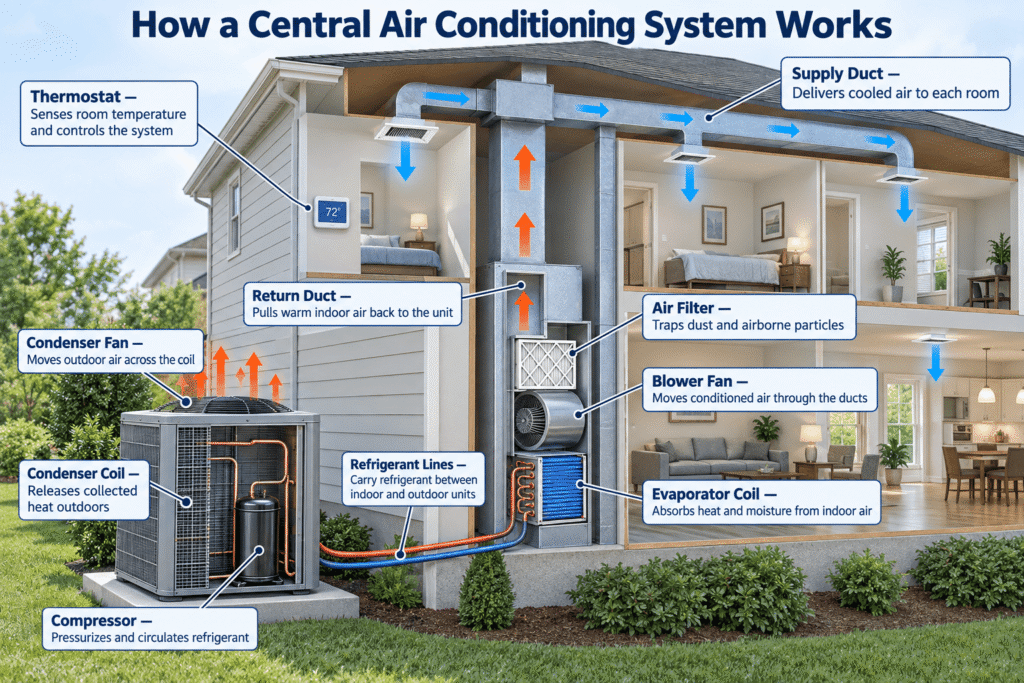
Every air conditioner, regardless of type, relies on several key components to function effectively. The compressor acts as the system’s heart, pumping refrigerant through the ac system and enabling the cooling process. Inside, the evaporator coil works its magic by absorbing heat from indoor air, while the condenser coil outside releases that absorbed heat into the environment. This cycle keeps your living space cool and comfortable.

Don’t forget the thermostat, the brain of your HVAC system. It allows you to set your desired temperature, ensuring your air conditioner maintains the perfect climate. Understanding these unit components helps you diagnose issues and appreciate the intricate dance of cooling that takes place within your air conditioner.

How Your Air Conditioner Works to Keep You Cool

At the core of every cooling process is the refrigerant, a special fluid that absorbs and releases heat as it cycles through your air conditioning unit. As it moves, the fan circulates cool air throughout your home, ensuring an even distribution of comfort. Meanwhile, the thermostat keeps a vigilant eye on temperature changes, adjusting the cooling as needed to maintain your desired climate.

But there’s more! Your air conditioning unit also plays a vital role in removing humidity from the air. By reducing moisture levels, it enhances comfort and creates a more pleasant environment. When you understand the unit function and the mechanics behind your AC system, you’re better equipped to keep it running smoothly.

Common Air Conditioning Problems and Quick Fixes

Technician using tools to troubleshoot a home air conditioning unit

Even with regular maintenance, air conditioners can encounter issues. Understanding these common problems and knowing how to address them can save you time, money, and discomfort.

Identifying Common AC Problems

Strange noises, such as clanking or rattling, often signal loose or worn components within your AC unit. Addressing these sounds promptly can prevent further damage. Weak airflow might suggest clogged filters or blocked vents, hindering the system’s cooling efficiency. If you notice warm air blowing from the vents, it could indicate potential refrigerant issues, requiring immediate attention to avoid more significant problems. Frequent cycling, where the unit turns on and off rapidly, often points to thermostat or electrical problems that need troubleshooting.

By recognizing these air conditioning issues, you can take proactive steps to maintain an even cooling environment and ensure your system operates smoothly.

Simple Fixes for Minor Issues

Sometimes, the solution to your AC problems is simpler than you think. Replacing or cleaning air filters can significantly improve airflow, restoring your unit’s efficiency. Adjusting the thermostat settings might resolve temperature inconsistencies, ensuring your space remains comfortably cool. Make sure all vents are open and unobstructed; this simple step can boost your system’s performance. Additionally, tightening any loose screws can eliminate those pesky rattling noises that disrupt your peace.

These quick fixes are part of the diy ac repair process that can keep your system running smoothly and maintain your comfort without professional intervention.

Preventing Common Air Conditioner Problems

Prevention is always better than cure, especially when it comes to maintaining your air conditioner. Regular filter changes, ideally every one to three months, maintain optimal airflow and efficiency. Seasonal inspections can catch small issues before they escalate into costly repairs. Keeping the area around your outdoor unit clear of debris prevents blockages and ensures efficient operation. Finally, keeping vents and registers open promotes even cooling throughout your home.

By adhering to a consistent maintenance schedule, you can prevent ac problems and enjoy a more reliable cooling system.

How to Troubleshoot Your AC When It’s Not Cooling

When your air conditioner stops cooling, it’s time to roll up your sleeves and investigate. A systematic approach can help you pinpoint the issue and get your system back on track.

Checking Your Thermostat Settings

Start by examining your thermostat settings. Make sure it’s set to “cool” mode and that the temperature setting aligns with your preference. If the thermostat screen is blank, replace the batteries to restore functionality. Also, check that the thermostat isn’t placed in direct sunlight, as this can cause inaccurate readings and affect the cooling process.

By ensuring your thermostat settings are correct, you can often resolve uneven cooling issues without further intervention.

Inspecting Air Filters and Vents

Next, inspect your air filters. Over time, they accumulate dust and debris, restricting airflow and hindering your ac system‘s performance. Check filters monthly and replace or clean them as needed. Ensure all vents are open and free from obstructions like furniture or curtains, which can disrupt airflow. Regularly clean dust and debris from vent grilles to maintain proper function.

These simple air conditioning maintenance steps can prevent ac problems and keep your system running efficiently.

Examining the Circuit Breaker and Power Supply

If your AC still isn’t cooling, check the circuit breaker for any tripped switches. Resetting the breaker can restore power to your unit. Also, verify that the AC unit’s power switch is on and inspect electrical connections for visible damage.

These troubleshooting steps are crucial for restoring unit power and ensuring your air conditioning system runs smoothly.

The Importance of Regular AC Maintenance for Your Home

Regular ac system care is essential for maintaining comfort and efficiency in your home. A proactive approach can prevent unexpected breakdowns and extend the lifespan of your air conditioning unit.

Benefits of Regular Air Conditioning Maintenance

Routine maintenance offers numerous benefits. It extends the lifespan of your AC system, allowing you to enjoy cool comfort for many years. Regular checks improve energy efficiency, resulting in lower utility bills. Timely maintenance reduces the risk of unexpected breakdowns, ensuring your system operates smoothly when you need it most. Consistent care ensures optimal performance, keeping your home comfortable and your wallet happy.

By prioritizing regular maintenance, you can maximize your air conditioner performance and minimize repair costs.

Creating a Maintenance Schedule

To stay on top of maintenance, create a schedule that includes biannual checks before the summer and winter seasons. Mark filter replacement dates on your calendar, and set reminders for regular thermostat inspections. Plan for professional inspections annually to catch any issues early.

By incorporating these maintenance planning steps into your routine, you can keep your cooling system in top shape.

Essential Maintenance Tasks for Homeowners

Several maintenance tasks are essential for keeping your air conditioning unit running smoothly. Clean or replace air filters every one to three months to maintain optimal airflow. Clear debris from the outdoor unit to improve efficiency. Inspect and clean the condensate drain line regularly to prevent clogs and leaks. Periodically check for leaks or unusual noises to catch potential issues early.

These air conditioning care tasks are vital for maintaining your ac system and ensuring reliable performance.

Recognizing When Your Air Conditioner Needs Professional Repair Services

Homeowner examining an air conditioner with noticeable leaks and wear

Sometimes, even the best DIY efforts aren’t enough, and professional intervention is necessary. Recognizing when your air conditioner needs expert help can save you from further headaches.

Signs Your Air Conditioner Needs Repair

Unusual odors, such as musty or burning smells, often indicate mold or electrical problems within your unit. Persistent leaks suggest refrigerant or drainage issues that require attention. If you experience inconsistent temperatures, it could be due to failing components that need replacement. Rising energy bills often point to declining efficiency, signaling the need for repair.

Identifying these air conditioning issues early can prevent more significant unit problems and maintain your cooling efficiency.

Understanding When a Problem Requires Professional Help

Certain issues, like electrical problems, require expertise to address safely. Refrigerant leaks need professional handling, as improper repairs can be dangerous and illegal. Complex component replacements, such as motors or compressors, should be left to experts who can ensure proper installation. If you find that your DIY attempts don’t resolve persistent issues, it’s time to call the pros.

Knowing when to seek repair services can save you from costly mistakes and protect your system.

Avoiding Costly Repairs by Acting Early

Addressing small issues quickly can prevent major breakdowns and emergency AC repair costs. Regular maintenance allows professionals to detect problems before they escalate. Timely intervention by experts can save you money on repairs and ensure uninterrupted comfort during peak seasons.

By prioritizing early intervention, you can avoid costly repairs and maintain a reliable air conditioning system.

DIY Tips: Simple Air Conditioning Repairs You Can Do at Home

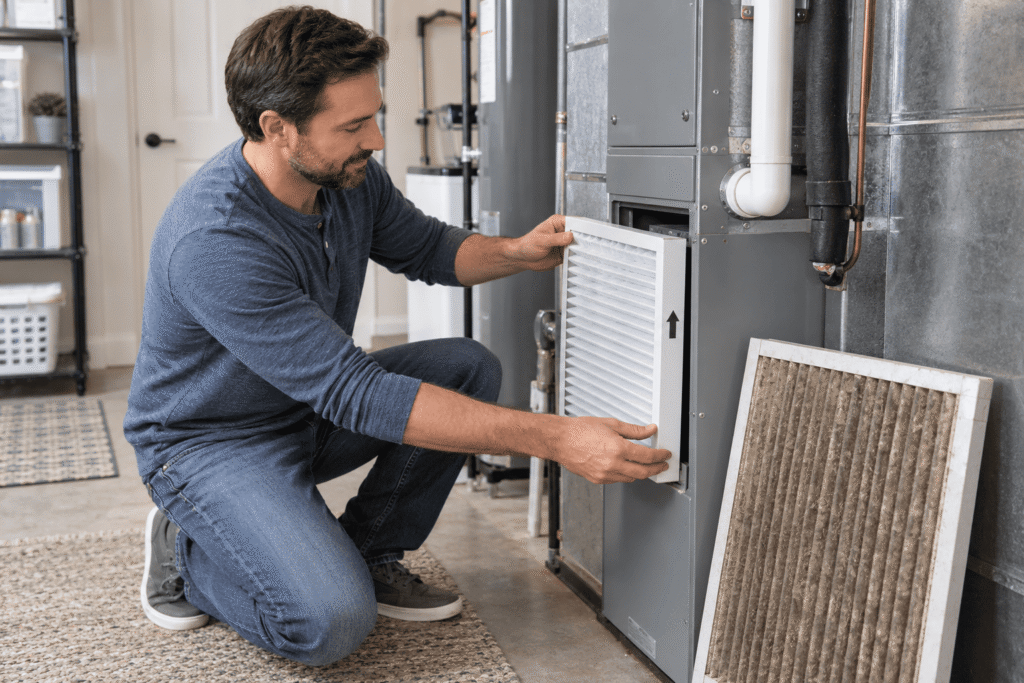
Homeowner replacing an air filter in a residential air conditioning system

For those who enjoy tackling minor repairs, there are several diy ac repair tasks you can handle at home. With the right tools and know-how, you can keep your air conditioning unit running smoothly.

Tools You Need for Basic AC Repairs

Having the right tools is essential for performing basic repairs. Screwdrivers are a must for accessing and securing components within your unit. A multimeter allows you to test electrical connections safely, ensuring everything is in working order. Use a vacuum to clean dust and debris from vents and coils, improving airflow and efficiency. A flashlight is handy for inspecting hidden areas and ensuring nothing is out of place.

Equipped with these diy tools, you’re ready to tackle minor unit maintenance tasks.

Safe DIY Repairs You Can Tackle

There are several safe repairs you can handle yourself. Replacing air filters is a straightforward task that can significantly enhance your air conditioning care. Cleaning the outdoor unit helps improve airflow and system efficiency. Tightening loose electrical connections ensures safe and reliable operation. Clearing blockages in the condensate drain line can prevent leaks and water damage.

These repair process steps are easy to follow and can prolong the life of your ac unit.

When to Stop and Seek Professional Assistance

While DIY repairs are often effective, there are times when you should stop and seek professional help. Electrical repairs should always be handled by qualified professionals to avoid safety hazards. Refrigerant handling requires certification and expertise to manage safely. Motor or compressor issues necessitate professional attention to ensure proper resolution. Complex diagnostic tests and evaluations are best left to skilled technicians.

Knowing when to call the pros is crucial for maintaining your hvac repair needs safely and effectively.

When to Call in the Pros: Knowing Your Limits with AC Repairs

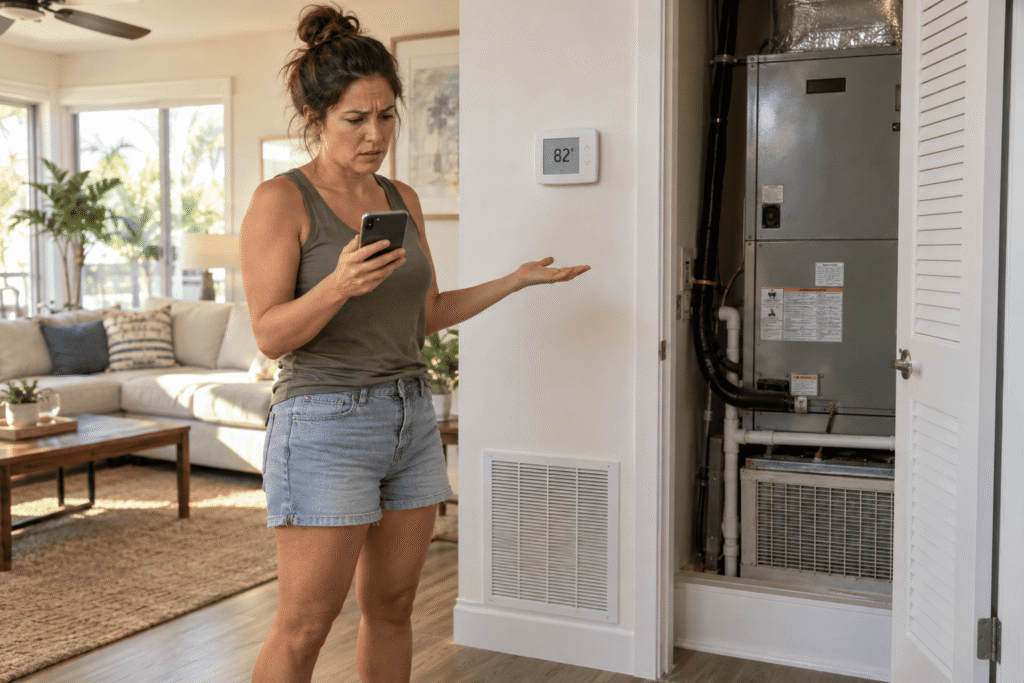
Frustrated individual looking at a malfunctioning air conditioning unit with a phone in hand

Understanding the limits of DIY repairs is essential for avoiding costly mistakes and ensuring your system’s longevity. Knowing when to call in the experts can keep your air conditioning unit running smoothly.

Evaluating the Complexity of Air Conditioning Issues

If your DIY attempts don’t resolve an issue, it may be more complex than anticipated. Complicated mechanical failures need expert diagnosis to determine the root cause. Electrical problems pose safety risks and require professional skills to address. Systematic failures, such as those affecting multiple components, often require comprehensive evaluations by professionals.

Recognizing issue complexity can help you make informed decisions about seeking professional help.

Potential Risks of DIY AC Repairs

While DIY repairs can save money, they also come with risks. Incorrect repairs can cause further damage or void warranties, leading to more significant issues. Electrical hazards pose serious safety risks that should not be underestimated. Misdiagnosis can result in costly mistakes and repairs. Refrigerant handling without certification is illegal and dangerous, emphasizing the importance of professional involvement.

Understanding diy risks helps you weigh the benefits against the potential downsides of tackling repairs yourself.

How Professional Services Can Save Time and Money

Professional services offer numerous advantages, including accurate diagnoses that avoid trial and error. Certified technicians ensure efficient and lasting repairs, preventing costly breakdowns and energy waste. Expert services maintain system warranties and value, protecting your investment. Timely repairs by professionals can prevent more extensive and expensive issues from developing.

By choosing professional services, you can save time and money on ac repair and enjoy peace of mind.

How to Choose the Right HVAC Repair Service in Atlanta

Selection of HVAC service provider brochures spread out on a table with a map of Atlanta

Selecting the right HVAC repair service is crucial for ensuring quality repairs and reliable service. Knowing what to look for can help you make the best choice for your needs.

Key Qualities to Look for in an HVAC Service

When choosing an HVAC service, look for key qualities that indicate reliability and expertise. Certification ensures technicians are qualified and knowledgeable about air conditioning repair. Experience in the industry guarantees reliable service and problem-solving skills. Positive reviews reflect customer satisfaction and trust in the service provided. Transparent pricing indicates honesty and reliability, helping you avoid unexpected costs.

These hvac service qualities can guide you in selecting the right repair company for your needs.

Questions to Ask Potential Repair Services

Before hiring a repair service, ask important questions to assess their suitability. Inquire about the company’s licensing and insurance coverage to protect yourself and your property. Ask about the experience level of their technicians, ensuring they have the skills needed for your repairs. Request a breakdown of services provided and related costs to understand what you’re paying for. Clarify warranty terms for parts and labor, ensuring you’re covered in case of future issues.

These repair service questions can help you make an informed decision when choosing professional services.

Evaluating Repair Service Reviews and Testimonials

Online reviews provide valuable insights into customer experiences with repair services. Look for testimonials that highlight the strengths and reliability of the service provided. Consistent positive feedback indicates quality and customer satisfaction, making it easier to trust the company. If you encounter negative reviews, see how the company addresses them, as prompt responses demonstrate accountability and commitment to improvement.

By evaluating service reviews, you can gain confidence in your choice of hvac service for atlanta air conditioning repair.

Balancing DIY Efforts and Professional Air Conditioning Services

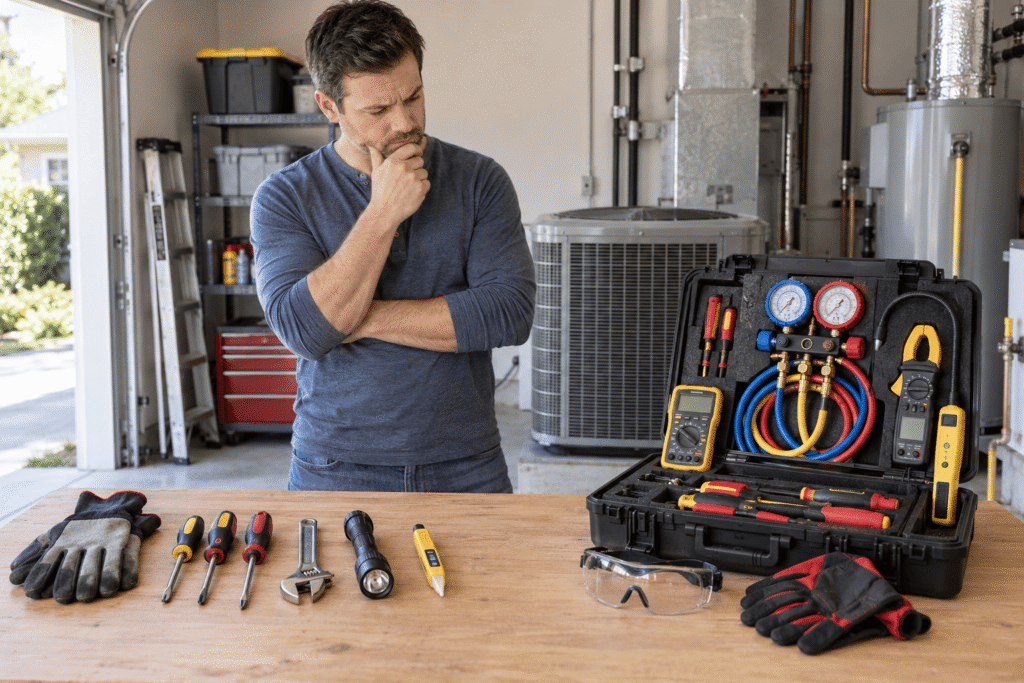
Person comparing DIY repair tools with a professional service toolkit

Striking a balance between DIY efforts and professional services is key to maintaining your air conditioning system effectively. Knowing when to handle repairs yourself and when to call in the experts is essential for optimal performance.

Understanding the Balance Between DIY and Professional Repairs

Simple maintenance tasks, like changing filters or cleaning the outdoor unit, can be handled by homeowners. However, complex repairs, such as electrical issues or refrigerant handling, are best left to skilled professionals. Knowing your limits ensures safety and prevents costly errors, while combining efforts maintains efficiency and performance.

By balancing diy and professional repair efforts, you can keep your air conditioning strategy on track.

Cost Considerations for AC Repairs

DIY repairs can save money on minor fixes and regular maintenance, reducing the need for professional intervention. However, professional services prevent expensive mistakes and breakdowns, offering long-term savings. Regular maintenance reduces repair costs over time by catching issues early. Weighing immediate costs against long-term savings is crucial for making sound financial decisions.

Considering repair costs and ac repair expenses helps you make informed choices about your hvac repair needs.

Making Informed Decisions for Your Home’s Comfort

When faced with AC repair decisions, consider the urgency and complexity of the issue. Evaluate potential risks versus the benefits of DIY repairs, seeking professional advice when in doubt. Prioritize safety, efficiency, and comfort for your home, ensuring your air conditioning system meets your needs.

By making informed decisions, you can optimize your home comfort and air conditioning options.

The Role of HVAC and Plumbing in Comprehensive Home Maintenance

A well-maintained home relies on both HVAC and plumbing systems working in harmony. Understanding their relationship can enhance overall efficiency and comfort.

How HVAC and Plumbing Systems Work Together

HVAC systems rely on plumbing for efficient drainage, ensuring moisture is removed from the home. Shared components, such as condensate lines, may require joint maintenance and inspections to prevent issues. Coordinated efforts between HVAC and plumbing services ensure optimal home comfort and efficiency. Proper integration prevents system conflicts and maintains a balanced environment.

Understanding integrated systems can improve your home maintenance approach.

Importance of Integrating HVAC and Plumbing Maintenance

Joint maintenance enhances overall home efficiency by addressing both HVAC and plumbing needs. Regular inspections prevent leaks and water damage, protecting your home from potential issues. Integrated schedules streamline maintenance efforts, reducing the need for separate appointments. Coordinated services minimize unexpected repair needs and ensure comprehensive care.

By prioritizing integrated maintenance, you can enjoy a well-functioning home environment.

Scheduling Regular HVAC and Plumbing Services

Plan biannual checks for both HVAC and plumbing systems to maintain optimal performance. Coordinate services to minimize disruptions and reduce costs, ensuring comprehensive care. Keep detailed records of maintenance and repairs, allowing you to track work done and anticipate future needs. Engage trusted professionals for both HVAC and plumbing services, ensuring your home receives the care it deserves.

By following a maintenance schedule, you can optimize your hvac services and plumbing services for a comfortable and efficient home.

Keep Your Home Cool With Professional AC Care

Knowing when to handle basic maintenance and when to call a professional can help protect your air conditioner and your home’s comfort. If your system still blows warm air, makes unusual noises, or struggles to cool after simple checks, turn to Comfort Experts for air conditioning repair and maintenance in Fort Worth and surrounding North Texas communities. Schedule service today to address the problem and get your home feeling comfortable again.

Sept 11-12 : Parker County Sheriff’s Posse Ranch Rodeo

Parker County Sheriff’s Posse Ranch Rodeo

Experience the spirit of Texas at the Parker County Sheriff’s Posse Ranch Rodeo, September 11–12 in Weatherford.

Where the Old West Still Rides

Watch real ranch teams compete in fast-paced events that showcase the skill, grit and traditions of working ranch life. The weekend also includes Native American performances, the Matched Horse Race, Chigger Classic Corgi Dash, chuck wagon dinner and a dance following the rodeo.

It’s a family-friendly celebration of the people, animals and traditions that helped shape Texas.

Hobson Comfort Experts is proud to support events that bring our community together and keep local traditions alive.

Parker County Sheriff’s Posse Arena
2251 Mineral Wells Hwy
Weatherford, TX 76088

Directions


Friday, September 11 & Saturday, September 12, 2026

[Get Tickets & Event Information]

Sept 11 – Oct 3 : The Promise Show

We’re pleased to offer you two complimentary General Admission tickets to The Promise, courtesy of Hobson Comfort Experts. Receive your complimentary Tickets here: https://thepromisetexas.com/hobson-comfort-experts/

Details about the event

Willow Park Baptist Church

777 Crown Pointe Blvd, Willow Park, TX 76087
Just off I-20, west of Fort Worth
Free parking on-site
Including accessible spaces. Arrive 30 min early for best spots.
Doors open 90 minutes before showtime
5:30pm for 7pm shows · 12:30pm for 2pm matinees
25 minutes from Fort Worth
35 min from Arlington · 45 min from Dallas

Directions to the event:

Voted Best Electricians in Parker County 2025

Best of the Best Award from the Weatherford DemocratWe are thrilled to share some exciting news with our community – Comfort Experts has been voted Best Electricians of Parker County in the Weatherford Democrat’s 2025 Best of the Best Awards!

This recognition means so much to us because it comes directly from the people we serve every day. The Best of the Best awards celebrate local businesses that go above and beyond, and being chosen as Parker County’s top electricians is a true honor.

A Commitment to Excellence

For years, Comfort Experts has been dedicated to providing reliable, safe, and high-quality electrical services. From routine repairs to complex installations, our licensed electricians approach every job with professionalism, care, and a focus on customer satisfaction. Winning this award reinforces that our hard work and dedication to excellence have made a lasting impact in our community.

Thank You, Parker County!

We couldn’t have achieved this recognition without the support of our incredible customers. Your trust in us and your votes made this possible, and we are deeply grateful. Serving Parker County isn’t just our job, it’s our privilege.

Looking Ahead

As we celebrate this award, we remain committed to raising the bar for electrical service in Parker County and beyond. Whether it’s keeping your home safe, upgrading your systems, or providing emergency repairs, Comfort Experts will continue to be there when you need us most.

Once again, thank you for choosing Comfort Experts as the Best Electricians of Parker County in 2025. We’re proud to serve you, and we look forward to many more years of excellence!

Comfort Experts Awarded Living Magazine’s BEST OF 2025

Living Magazine Best Of 2025 AwardWe’re honored to announce that Comfort Experts has once again been recognized by Living Magazine’s Best Of Readers’ Choice Awards across multiple communities and service categories! These awards are a true reflection of the trust our neighbors place in us and the dedication of our entire team.

Award-Winning Home Services Across North Texas

This year, Comfort Experts earned recognition in the following locations and trades:

Arlington / Mansfield / Grand Prairie – Best Heating & Air, Best Electrician, Best Christmas Light Installation

Coppell / Irving – Best Heating & Air

Flower Mound – Best Electrician, Best Outdoor Lighting

McKinney / Allen – Best Outdoor Lighting

NE Tarrant County – Best Electrician, Best Outdoor Lighting

Frisco / Plano – Best Christmas Light Installation

Keller – Best Electrician

Why These Awards Matter

The Best Of awards are voted on by local readers who share their voices about the businesses they trust most. To us, this recognition isn’t just about the services we provide, it’s about the relationships we’ve built with families across North Texas.

Whether we’re keeping your home’s air conditioning comfortable year-round, ensuring your electrical systems are safe and reliable, or making your holidays shine with professional lighting, we’re grateful for the opportunity to serve.

A Thank You to Our Communities

We couldn’t do this without you, our loyal customers and neighbors. Your support inspires us every day to deliver excellent service, innovative solutions, and care that goes above and beyond.

From everyone at Comfort Experts, thank you for voting us the best! We look forward to continuing to earn your trust in the years ahead.

Comfort Experts Named One of Fort Worth Inc.’s Best Places to Work 2025

Best Places to Work In Fort Worth 2025We’re excited to share some incredible news. Comfort Experts has been recognized as one of Fort Worth Inc.’s Best Places to Work 2025!

This honor was announced at the magazine’s 10th annual Best Companies to Work For luncheon, held at the River Ranch Stockyards. Fifty companies across Fort Worth were celebrated for creating outstanding workplace environments, and we’re proud to be counted among them.

What makes this award so meaningful is that it’s based on detailed evaluations by the Workforce Research Group, an independent firm that measures everything from employee benefits, communication, training, and advancement opportunities to workplace culture and overall satisfaction. Even more importantly, employees themselves participate through anonymous surveys, making this recognition a direct reflection of the voices of our team.

At Comfort Experts, we believe that when you take care of your people, they’ll take great care of your customers. This award is proof that our commitment to cultivating a supportive, engaging, and growth-focused workplace is making a difference.

We want to thank Fort Worth Inc., the Workforce Research Group, and the incredible sponsors who made this celebration possible. Most of all, we want to thank our amazing team. You are the heart of Comfort Experts, and this award belongs to you.

Here’s to another year of growth, service, and making Comfort Experts not just the best place to work, but the best team to work with.